

Understanding Zero-Drop: More Than Just a Trend
Zero-drop shoes are often hailed as revolutionary in the running and fitness world, offering a different approach to footwear design, but confusion still surrounds what the term actually means. Many believe zero-drop is synonymous with barefoot shoes, but these two concepts, while related, are not identical. This guide will clarify what zero-drop really is, its distinct benefits, and how it differs significantly from true barefoot style footwear, providing a deeper understanding for consumers seeking optimal foot health and performance.
What Does Zero-Drop Mean?
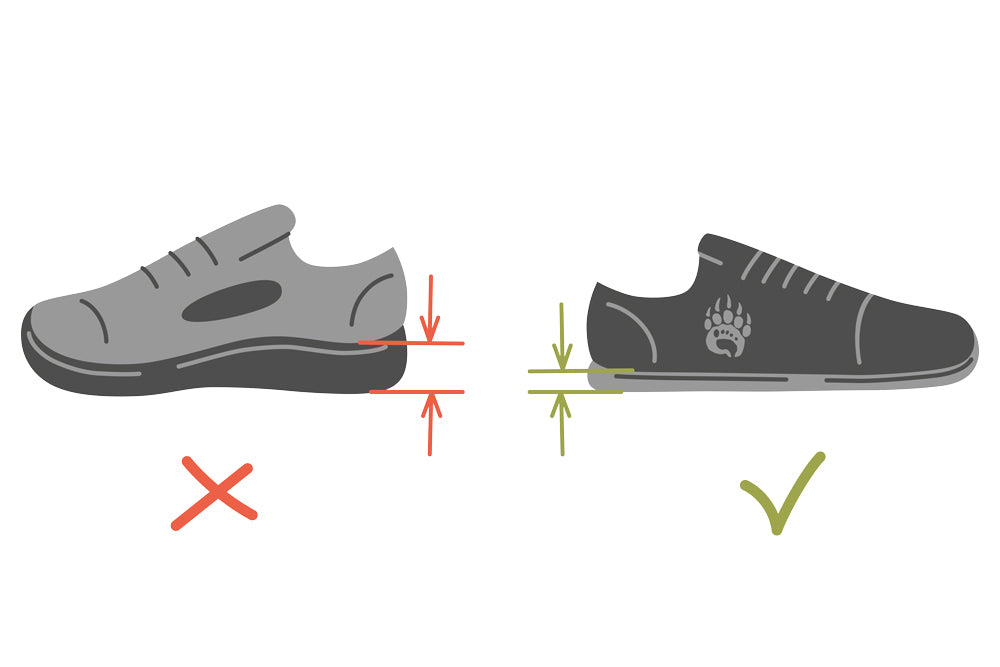
Zero-drop refers specifically to the height differential between the heel and the toe in a shoe. In many traditional running or athletic footwear designs, the heel is noticeably elevated above the toes by several millimeters. A shoe labeled as zero-drop, however, features no such height difference; the foot rests completely flat, mirroring the natural position of your foot when barefoot on the ground. This neutral alignment is a key feature distinguishing zero-drop shoes from conventional designs.
- Zero-drop = No elevation difference between heel and toe, promoting a natural foot posture.
- Typical drop in standard shoes can be 6-12 mm or more, altering natural foot mechanics.
- Zero-drop can be found in a variety of shoe types, including but not limited to minimalist and barefoot shoes.
Busting the Myth: Zero-Drop vs. Barefoot Shoes
Many consumers check shoe labels for zero-drop, assuming this single feature guarantees a complete barefoot experience. However, this is a common misconception. While all barefoot shoes inherently strive for zero-drop to mimic natural foot positioning, not all zero-drop shoes possess the full spectrum of features that define a true barefoot shoe. Understanding this distinction is crucial for making informed footwear choices.
Main Differences Explained
- Zero-Drop: Primarily focuses on the heel-to-toe height ratio, ensuring a level platform for the foot.
- Barefoot-Style: Encompasses a broader philosophy, featuring a generous wide toe box for natural toe splay, a highly flexible sole that allows unrestricted foot movement, minimal cushioning to provide exceptional ground feel, and lightweight construction to avoid restricting the foot's natural mechanics.
It's important to recognize that you can find barefoot shoes that are not perfectly zero-drop (due to manufacturing variations, though they aim for it), and conversely, heavily cushioned running shoes that are zero-drop but lack the other essential attributes of barefoot footwear.
Why Does Zero-Drop Matter?
A zero-drop shoe inherently places your foot in a neutral, natural position, which can have significant biomechanical benefits. This neutral alignment can enhance proprioception—your body's ability to sense its position and movement in space—leading to improved balance, coordination, and more efficient form during various activities such as walking, running, or strength training. This alignment encourages a more natural gait cycle, potentially reducing stress on joints.
- Promotes proper posture by encouraging a more upright and aligned body.
- Encourages a natural gait, allowing the foot to strike the ground in a way that minimizes impact.
- May reduce the risk of certain injuries linked to uneven weight distribution and unnatural foot mechanics caused by elevated heels.
How Barefoot and Zero-Drop Help You Train
We like to use the analogy of an arm in a cast to explain why minimal, barefoot-style shoes matter for foot strength and function. When your foot is continuously encased in a stiff, narrow shoe with excessive cushioning and an elevated heel, its intrinsic muscles weaken significantly from lack of use and stimulation. Just as an immobilized arm will experience muscle atrophy, so too will a foot that is inadequately challenged and used.
- Conventional shoes restrict crucial foot movement and the natural splaying of toes, which is vital for balance and shock absorption.
- Foot muscles weaken over time due to this lack of active engagement and the external support provided by traditional footwear.
- Weakened feet, consequently, increase the risk of dysfunction, pain, and various common injuries.
Barefoot shoes, which almost always incorporate zero-drop, actively help strengthen the intricate muscles, ligaments, and tendons in the feet. By allowing the foot to move naturally and interact more directly with the ground, they encourage the development of stronger, more resilient, and more capable feet and ankles. This foundational strength translates into improved performance in sports, more effective workouts at the gym, and greater overall comfort and stability in daily life.
Zero-Drop Does Not Equal Barefoot Benefits
If you're specifically shopping for footwear to achieve the comprehensive benefits associated with barefoot training and natural foot health, understanding that zero-drop is only one component of the equation is critical. To truly gain these advantages, you need to look for additional, synergistic qualities beyond just the heel-to-toe ratio.
- A generous wide toe box is essential for natural toe splay, allowing toes to spread and grip the ground effectively.
- Minimal cushioning is key for greater ground feedback, enhancing proprioception and allowing the foot to adapt to varied terrain.
- A highly flexible sole that easily bends and twists with your foot mimics the natural movement of an unshod foot.
- Durable yet unrestrictive materials ensure the foot can move freely without impediment.
It's worth noting that some zero-drop shoes, particularly those designed for specific running purposes, can still be highly cushioned and relatively stiff. While they eliminate heel lift, they aren't necessarily built for fostering natural foot movement or actively strengthening the feet. In contrast, true barefoot shoes are meticulously designed to closely resemble how our feet naturally move, feel, and respond to the environment.
Taking Action: Choosing the Right Shoe for You
When assessing new footwear, it's vital to look beyond just the zero-drop label. Actively engage with the shoe: Can you easily twist and bend it in multiple directions? Is the toe box genuinely wide enough for your toes to comfortably spread out, rather than being compressed? Is the cushioning thin enough that you can truly feel the ground beneath you? Answering yes to these questions indicates that the shoe is likely to support and help you build stronger, healthier feet.
Here are actionable tips when shopping for footwear that truly supports natural foot function:
- Don’t rely solely on marketing buzzwords like zero-drop; investigate the shoe's full feature set.
- Always test the shoe’s flexibility and ground feel directly to ensure it meets your expectations for natural movement.
- Prioritize shoes with a wide toe box and minimal cushioning to allow for optimal foot mechanics.
Conclusion: Build Stronger Feet, Move Better
Zero-drop is undoubtedly an important concept in modern footwear design, offering benefits by promoting a neutral foot position. However, it is not the sole determinant when it comes to achieving optimal foot health and performance. Remember that the terms zero-drop and Barefoot are not interchangeable—one specifically refers to the shoe’s heel-to-toe height ratio, while the other encompasses a holistic approach focused on whole-foot function, strength, and natural movement.
If you are serious about improving your physical performance, reducing injury risk, or simply moving better in your daily life, your focus should be on selecting barefoot shoes that comprehensively check both boxes: featuring zero-drop and incorporating all the essential barefoot-style attributes. Commit to strengthening your feet just as diligently as you train the rest of your body. To learn more about holistic foot health and performance footwear, subscribe to our newsletter, and begin your transformative journey toward healthier, happier movement today.


