

New research shows that strengthening your feet and wearing minimalist footwear can cut standing-related pain by 57%. Here’s the detailed science behind building stronger, pain-free feet at work.
The Hidden Crisis in Standing Professions
Millions of workers across various sectors—nurses, teachers, retail staff, line workers, and warehouse employees—spend their entire day on their feet, often on unforgiving surfaces. Despite the prevalence of these roles, most workplaces still underestimate the long-term impact of prolonged standing, treating it as if it’s harmless. However, standing for extended periods compresses joints, stiffens muscles, hinders circulation, and places continuous stress on your feet, which are the fundamental support system for the entire body. When this foundation is compromised, the consequences resonate throughout, leading to sore arches, burning heels, tight calves, aching knees, fatigued hips, and persistent end-of-shift back pain. Counterintuitively, many traditional “ergonomic” work shoes can exacerbate these issues by fighting your natural anatomy and disabling the foot’s inherent support systems that evolution has provided.
The Science Behind Foot Core Training
Recent groundbreaking research published in Nature Scientific Reports revealed something truly extraordinary: Simply integrating minimalist footwear into daily life can increase foot muscle strength by an impressive 57.4% in just six months. This level of adaptation is comparable to the strengthening seen in dedicated abdominal core or glute muscle training, yet it occurs naturally through everyday movement when using appropriate footwear. This underscores the powerful impact of allowing your feet to work as they were designed.
What Exactly Is the “Foot Core”?
Your feet are intricate structures, containing over 100 muscles, ligaments, and tendons. These components collaborate seamlessly to:
- stabilize every step
- maintain balance
- absorb impact forces
- support the critical arch shape
- distribute pressure evenly
- guide proper alignment upward into the knees, hips, and spine
When this foot core is strong and functional, your entire kinetic chain—the interconnected system of joints and muscles—becomes more stable, efficient, and resilient against the demands of prolonged standing.
Why This Matters for Standing Workers
While standing might appear passive, maintaining balance even in stillness is a highly active process. Research by Ridge et al. (2022) clearly demonstrated that the intrinsic foot muscles, particularly the deep stabilizers within the arch, play a crucial role in mediolateral (side-to-side) stability. Without robust foot core muscles, prolonged standing forces the body into harmful compensations, affecting:
- the knees (leading to valgus collapse)
- the hips (causing tightness and external rotation fatigue)
- the lower back (resulting in increased lumbar tension)
Strengthening the feet through a natural approach with minimalist footwear effectively reverses this detrimental pattern, fostering long-term stability and endurance for standing workers.
Why Your Work Shoes Are Making It Worse
Most work footwear prioritizes aesthetics, protective certifications, or excessive cushioning over sound biomechanics. This design philosophy results in shoes that actively interfere with your foot’s natural movement and force your body to compensate throughout the entire workday.
Raised Heels
Even a seemingly minor ½-inch heel significantly shifts your body weight forward, disrupting natural posture. This leads to:
- Increased calf tension and shortening of the Achilles tendon
- An exaggerated arch in the lower back, causing strain
- Compounded neck and shoulder tension
Together, these factors contribute to the classic “standing fatigue” posture, diminishing comfort and endurance.
Rigid Arch Support
While initial relief from arch support can be appealing, it paradoxically immobilizes the very muscles designed to actively support your arches and carry your weight. Over time, consistent bracing weakens these intrinsic foot muscles. Holowka et al. (2018) provides clear evidence: Modern cushioned footwear is directly associated with significantly weaker intrinsic foot muscles. This highlights a critical flaw in conventional designs for standing workers.
Narrow Toe Boxes
Your toes are naturally meant to splay wide, forming a stable tripod of support. Narrow shoes constrict this natural splay, crushing the toes into an unstable wedge. This creates:
- Imbalanced pressure points across the foot
- Compromised balance and stability
- Restricted circulation within the foot
- Long-term structural deformities like bunions and hammertoes
For individuals standing 8–12 hours daily, this design flaw is a direct contributor to chronic pain and reduced foot health.
The Bearfoot Solution: Natural Support for Standing Workers
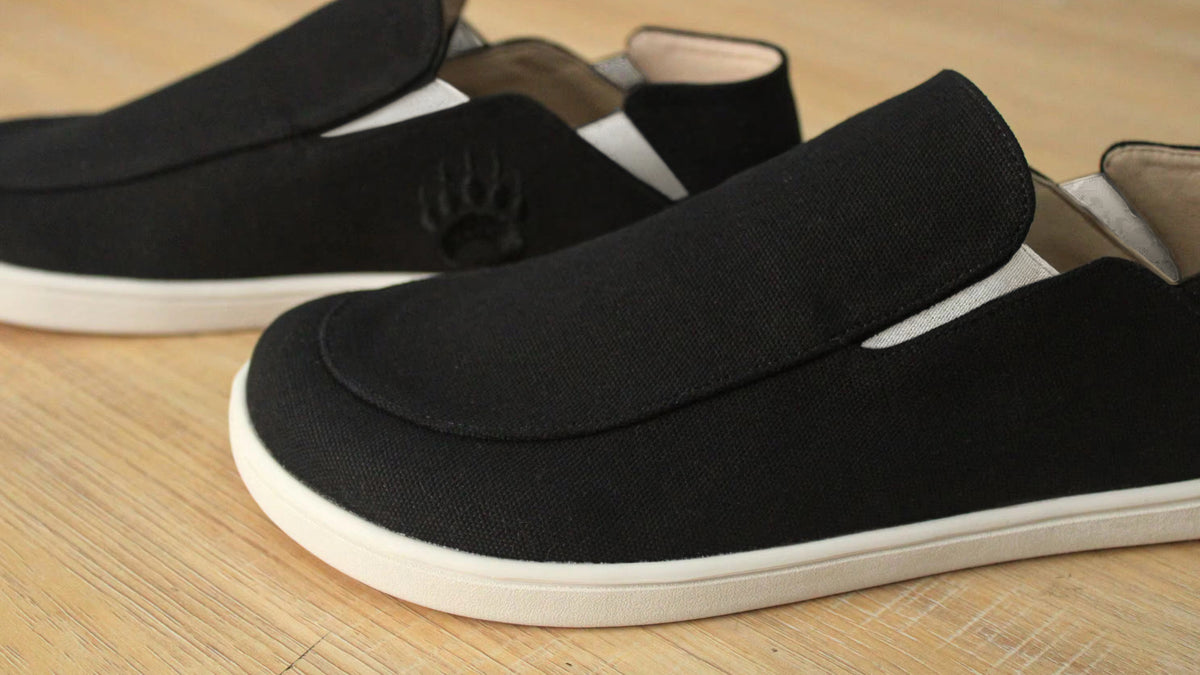
Bearfoot’s minimalist approach is engineered to restore the body’s natural alignment and optimal foot function, rather than overriding it with artificial support. These features make Bearfoot shoes ideal for strengthening the foot core and enhancing comfort for standing workers.
Zero-Drop Platform
By ensuring the heel and forefoot are level, Bearfoot shoes promote a naturally stacked spine. This eliminates the forward lean and forced compensations common with traditional raised heels, significantly reducing lower back strain during long shifts. This benefit is crucial for maintaining proper posture and preventing fatigue.
Extra-Wide Toe Box
Our extra-wide toe box allows your toes to splay, grip, stabilize, and carry load precisely as they were biologically designed to do. This dramatically expands your base of support, leading to improved balance during both static standing and repetitive motions. This feature directly contributes to the 57% reduction in pain experienced by users strengthening their feet with minimalist footwear.
Flexible, Foot-Engaging Construction
Bearfoot shoes are built to move harmoniously with your foot, not restrict it. Every step, subtle shift of weight, and minor balance correction actively contributes to strengthening the foot core muscles. This continuous engagement helps rebuild the natural strength that conventional shoes often inhibit.
Premium, Work-Ready Leather
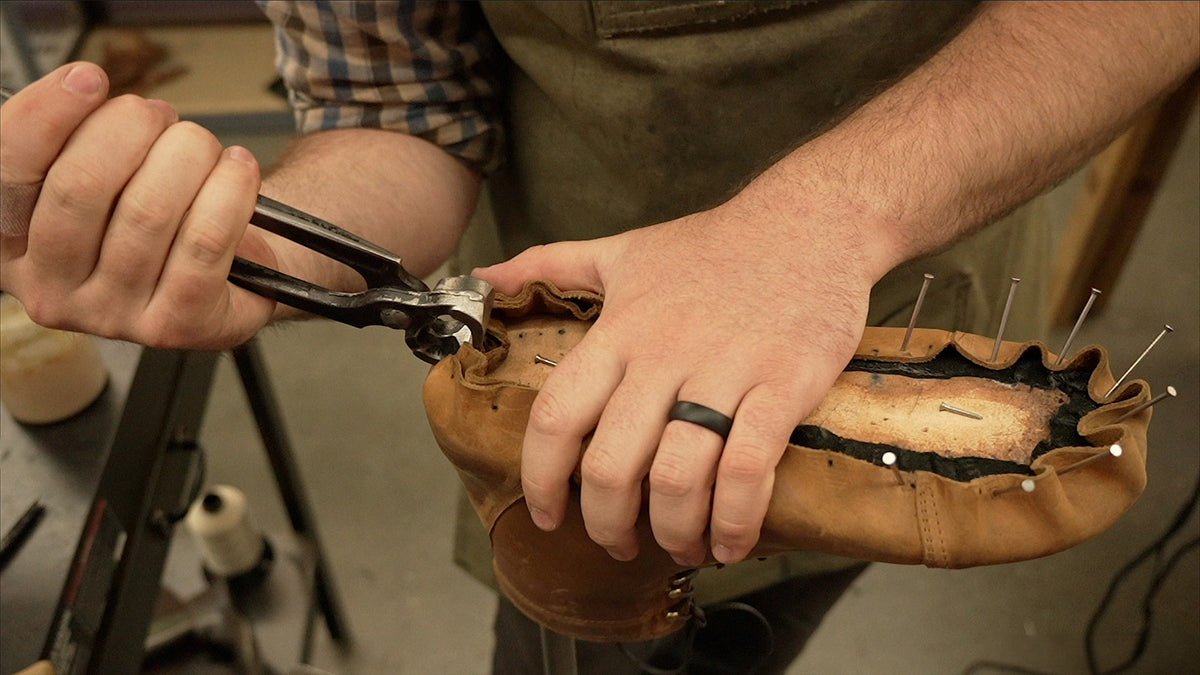
Crafted from thick, natural leather, our shoes mold to the unique contours of your foot over time. This creates a personalized, durable fit that not only offers superior comfort but also outlasts many synthetic alternatives, providing long-term value for standing professionals.
Combined, these thoughtfully integrated features support the foot by fostering its inherent strength, rather than promoting a dependence on artificial cushioning or rigid structures. This commitment to natural foot function makes Bearfoot shoes a superior choice for standing workers seeking lasting relief and improved performance.
5 Foot Core Exercises for Standing Workers
These targeted exercises are designed to unlock significant improvement when consistently paired with the use of minimalist footwear like Bearfoot shoes, accelerating the strengthening of your foot core.
1. Toe Spreading — 2 minutes, 3× daily
This exercise actively promotes toe independence, enhances circulation within the foot, and specifically strengthens the often-neglected interosseous muscles between your toes, crucial for overall foot stability.
2. Short Foot Exercise — During breaks
This fundamental exercise teaches the arch of your foot to actively lift and engage using its own musculature, rather than relying on external, artificial support. It's a cornerstone for building true arch strength.
3. Calf Raises — End of shift
Performing calf raises at the end of a long shift helps to boost blood flow, effectively reduce swelling that accumulates from prolonged standing, and builds essential ankle stability, further supporting the foot core.
4. Towel Scrunches — At home
This simple yet effective exercise directly targets the deep flexor muscles within the foot, which are vital for maintaining the arch shape and providing dynamic support during extended periods of standing.
5. Single-Leg Balance — 1 minute, 2× daily
Improving single-leg balance sharpens your proprioception—your body's sense of its position in space—and robustly reinforces the entire foot’s stabilizing system, making every step and moment of standing more secure.
Making the Transition: A Detailed 30-Day Plan
Transitioning to minimalist footwear requires a gradual approach to allow your feet and entire kinetic chain to adapt safely and effectively. This structured plan helps standing workers rebuild their foundation with Bearfoot shoes.
Weeks 1–2: Build the Base
- Begin by wearing Bearfoot shoes for 2–3 hours per day. This initial phase allows your feet to gradually accustom themselves to the zero-drop platform and wider toe box.
- Incorporate toe spreading, short foot, and towel scrunches into your daily routine. These exercises start engaging dormant foot muscles.
- Actively focus on maintaining upright posture and making slow, deliberate movement transitions to consciously engage your revitalized foot core.
Weeks 3–4: Increase the Load
- Progress to wearing Bearfoot shoes for half of your shift. Your feet will be stronger, ready for increased duration.
- Introduce single-leg balance exercises to further challenge and develop your foot's stabilizing capabilities.
- Pay close attention to any fatigue signals from your feet and body, resting when needed to prevent overexertion.
Month 2+: Full Integration
- You should now be able to comfortably wear your Bearfoot shoes for your full workday, experiencing sustained benefits.
- Consider progressing to more advanced foot and core routines to continue building strength and endurance.
- At this stage, expect noticeably improved endurance, reduced pain, and enhanced overall comfort throughout your standing hours.
Watch for Signs
- Good signs: Experiencing mild soreness, muscle fatigue, and warmth in your feet are normal indications that your foot muscles are engaging and strengthening, akin to starting any new exercise regimen.
- Bad signs: Any sharp pain, feelings of joint instability, or limping indicates that you may be progressing too quickly. If these occur, reduce wear time and consult a professional if pain persists. Transitioning slowly ensures the foot core adapts safely and effectively, preventing injury and maximizing long-term benefits.
The Bottom Line: Build Strength, Not Dependence
It’s not standing itself that incapacitates workers—it's weak foundations. The scientific data is unequivocal: cultivating stronger feet creates a healthier, more resilient standing posture that demonstrably reduces pain throughout the entire body. A remarkable 57% increase in foot strength, achievable through foot core training and minimalist footwear like Bearfoot shoes, can be the pivotal difference between dragging through the last hours of your shift and moving comfortably, confidently, and entirely pain-free. For the millions of standing workers who dedicate their days on their feet, this isn't merely about achieving temporary comfort; it's a profound investment in their longevity, productivity, and overall quality of life.
Ready to rebuild your foundation?
Explore Bearfoot’s innovative range of work-ready minimalist footwear, specifically designed to empower and support dedicated standing professionals.


